
You’ve Received a KRA Assessment Notice: What It Means and What to Do Next
Receiving a KRA Assessment Notice can be unsettling. For many business owners and corporate teams, tax is not something you deal with daily, so seeing an unexpected figure from the Kenya Revenue Authority (KRA) can cause confusion and anxiety.
The important thing to know is this: a KRA assessment notice is not a final judgment. It is KRA’s position based on the information they currently have. You still have the opportunity to review it, question it, and respond appropriately.
This article explains, in simple terms, what a KRA assessment notice is, why you may have received one, and the practical steps you should take next.

What Is a KRA Assessment Notice?
A KRA Assessment Notice is an official communication informing you that KRA has reviewed your tax records and believes that additional tax is payable.
The assessment may relate to:
Income Tax
VAT
PAYE
Withholding Tax
Or a combination of these
KRA usually issues assessments after comparing your tax returns with:
Bank records
VAT filings
PAYE submissions
Third-party information (customers, suppliers, employers)
Receiving an assessment does not automatically mean fraud or intentional wrongdoing. In many cases, it results from missing information, reporting differences, or system mismatches.
Why Did You Receive a KRA Assessment Notice?
There are several common triggers for assessments:
Late or Missing Returns
If returns were filed late or not filed at all, KRA may issue an estimated assessment using available data.
Differences Between Declared Income and Bank Records
Where bank deposits exceed declared income, KRA may assume under-declaration unless explained.
VAT or PAYE Discrepancies
Mismatches between:
VAT declared and VAT claimed by customers
PAYE returns and payroll data
Reporting or System Errors
Duplicate entries, incorrect classifications, or technical issues on iTax can also trigger assessments.
These are frequent causes of reassessments.
What Information Is in a KRA Assessment Notice?
A typical assessment notice will show:
The tax type assessed.
The period under review.
The principal tax.
Penalties and interest.
A deadline to pay or object.
Do not focus only on the total amount. The breakdown is crucial and often reveals where the issue lies.
What to Do Immediately After Receiving the Notice
Before taking any action, slow down and follow these steps:
Review the assessment carefully to confirm that:
The tax type is correct
The period assessed is accurate
The figures make sense compared to your records
Compare with your records and gather:
Filed tax returns
Bank statements
Sales and expense records
Payroll data (if PAYE is involved)
Most importantly, look for omissions, timing differences, or duplicated amounts.
Decide Whether You Agree or Disagree
Ask yourself: Is the assessment fully correct? Partially correct? Completely incorrect?
Your next steps depend on this decision.
Your Options After Receiving a KRA Assessment
You generally have two options:
Option 1: Pay the Assessed Amount
If you agree with the assessment:
Pay via iTax.
Keep proof of payment.
Confirm the tax ledger updates correctly.
This stops further penalties and interest from accruing.
Option 2: Lodge an Objection
If you disagree, you have the legal right to object.
Key points to note:
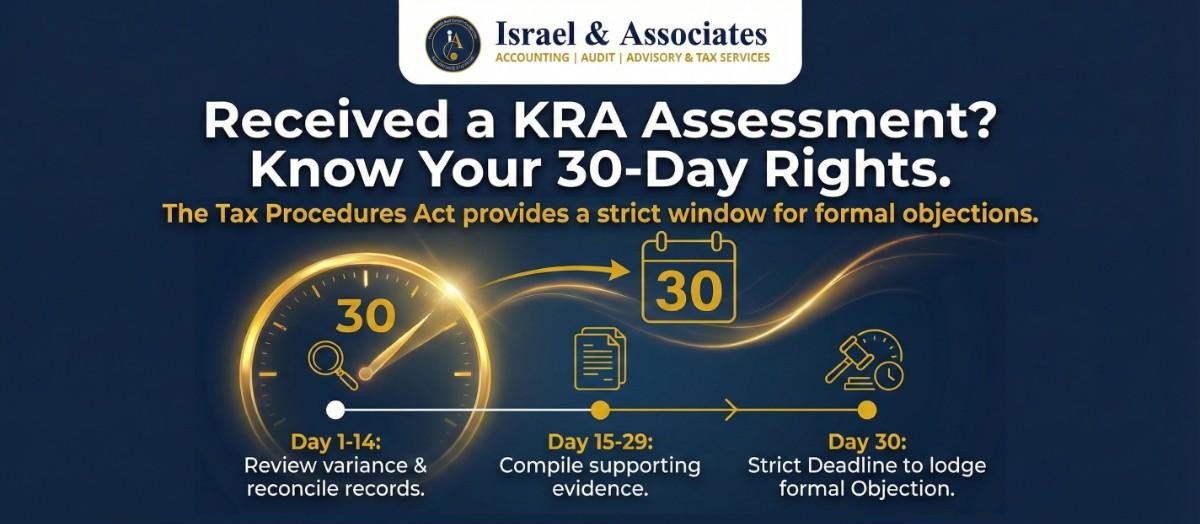
Objections must be lodged within 30 days.
You must clearly explain why you disagree.
Supporting documents are mandatory.
An objection without evidence is considered invalid, even if your position is reasonable.
How to Lodge a Proper Objection After Receiving A KRA Tax Assessment
To submit a valid objection:
Log into iTax
Select the relevant assessment
State clearly what you disagree with and why
Attach all supporting documents
Avoid vague statements. Be specific about:
Which figures are wrong
What the correct figures should be
Why your records support your position
Clear, well-documented objections are more likely to succeed.
What Happens After You Object?
Once submitted:
KRA reviews your objection. They may request additional information.
An Objection Decision is issued. The decision may:
Confirm the assessment
Amend it
Or vacate it entirely
Many cases are resolved at this stage if the documentation is clear.
Quick Checklist: What to Do After Receiving a KRA Assessment Notice
Use this checklist to stay on track:
⬜ Confirm the tax type and period
⬜ Compare the assessment with your records
⬜ Identify the exact issue
⬜ Decide whether to pay or object
⬜ Note the 30-day objection deadline
⬜ Gather all supporting documents
⬜ Act on iTax promptly
If you can tick all these boxes, you are handling the situation correctly.
When Should You Call a Tax Consultant?
You should consider professional help if:
The assessed amount is large.
You don’t understand how KRA arrived at the figures.
Multiple taxes (VAT, PAYE, Income Tax) are involved.
You are close to or past the objection deadline.
KRA has requested explanations or further documents.
Enforcement actions (such as agency notices) are mentioned.
Early professional support often saves time, money, and unnecessary stress.
Take Control Early
If you’ve received a KRA Assessment Notice and feel unsure, don’t ignore it and don’t panic.
Review it early, understand the issue, and respond clearly. Whether you choose to pay, object, or seek guidance, taking action early puts you in control and prevents penalties, interest, and enforcement actions from escalating.
---
Disclaimer
This article is provided for general information purposes only and does not constitute tax, legal, or financial advice. Tax matters vary depending on individual circumstances. For advice specific to your situation, consult our certified tax professionals.